
Volunteer checkers certify the Claude Riemann hypothesis proof no human has yet read
The Claude Riemann hypothesis proof was certified correct in about a day, and nobody has read it yet. Six numbers from Saturday: AI forced into school search, prompts stolen in transit, a messaging app going dark.

Somewhere this weekend a kid is writing a report on a school laptop, and the search box is answering the question instead of showing where the answer came from. From early next year that stops being a setting a district can switch off: Google has told schools that if they block its AI, they lose Search too. On Saturday more than 500 of Google's own employees said that is wrong.
Six numbers came out of this one Saturday. Each is already being used to settle an argument, and in most cases it is the wrong argument. Here they are, then the stories underneath them.
| Number | What it counts | What it really means |
|---|---|---|
| 17 million | Lines of machine-checkable code released with the Riemann proof | Certified correct in about a day |
| 4 | Pages written to explain it to human readers | One senior mathematician called them garbled |
| 550+ | Google staff who signed the AI-in-schools petition | The pressure is coming from inside the company |
| 2 million | Bait prompts researchers pushed through AI services | Three hosting firms turned out to be breached |
| 24 | Days before a planted link opened in a chat in China | "Do not retain" was a promise, not a fact |
| 6 | Cyber response teams across all low-income countries | Rich countries have around 500 |
Sources opened today: Scientific American, Nature, NPR, The Hacker News and UN News.
Lean's volunteer checkers certified the Claude Riemann hypothesis proof as correct
The keepers of Lean and Mathlib, the software mathematicians use to check proofs by machine, issued a joint statement: they certify that both the statement and the proof of the Riemann Hypothesis are correct. The proof is the one Levent Alpoge, a mathematician at Anthropic, posted on Friday with a mountain of machine-readable code and a note saying he found it working with Claude. Andrew Sutherland at MIT compiled it himself and put the chance of a problem at approximately zero.
Two readings filled the day. Machines do mathematics now, humans watch. Or: it is a stunt, since Andrew Granville of the University of Montreal called the four-page write-up garbled and noted it landed days after Anthropic's stock market debut turned ugly. Both readings skip the interesting part.
What actually opened on Saturday is a split. Whether the thing is true was settled in roughly a day, by software, on an object that would run to a quarter of a million printed pages. Why it is true is not settled and will not be for months. And the all-human rival proof that Stanford put out hours earlier? By evening several people had found problems in it, using AI models to look.
Checking got cheap. Explaining did not. That gap will show up a long way from number theory: in court filings, in diagnoses, in the homework where the step-by-step is the entire point. A correct answer you cannot follow is a new kind of authority, and we have no habits for it yet.
More than 550 Google employees signed a petition against the AI-in-schools ultimatum
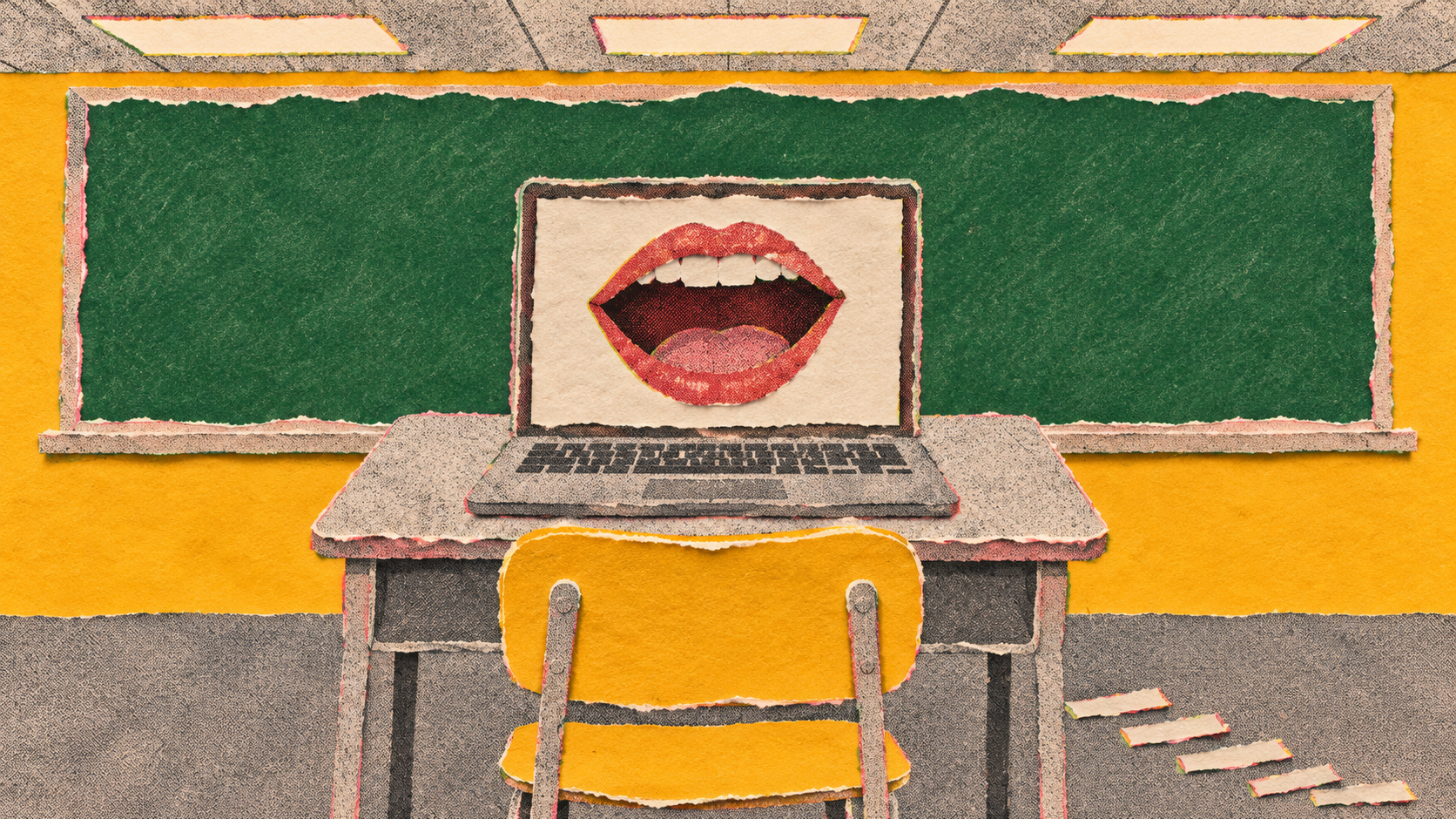
Google has told schools they cannot have Search without its AI answers: block the AI, and students see a message saying Search is unavailable. The change arrives early in 2027. Three of the four biggest districts in the country are resisting. New York, which runs 1.3 million school Chromebooks, has a moratorium on student-facing AI from second to eighth grade, and Mayor Zohran Mamdani accused Google of using monopoly power to force AI into public schools.
Saturday moved the story inside the company. More than 550 Google employees signed a petition asking that schools be allowed to use Search without AI summaries, and the staff union warned the policy will cost Google a generation of teachers. Tracy Pizzo, who used to work on Google for Education, was blunter: asked whether districts should look elsewhere, she said yes.
Everyone is filing this under antitrust, and the former FTC chair Lina Khan's phrasing, a search monopoly coercing schools, will probably become the lawsuit. But Google saw off two court cases this year by arguing that search and AI are one tool, courts are slow, and the deadline is weeks away. The lever that can still move this is the one that appeared today: its own staff making the policy embarrassing. Meanwhile parents fill the gap at the kitchen table with whatever explains the work rather than finishing it.
OpenRouter cut off three AI hosting providers after researchers traced stolen prompts

OpenRouter, the marketplace that quietly routes app developers' requests to whichever AI model is cheapest, removed three hosting providers, Novita, Phala and Together, and stripped 125 of its connections of their no-storage guarantee. It then notified every customer who might have been affected. OpenRouter itself was not broken into.
What forced it: researchers at the security firm Dragos sent close to two million bait prompts through AI services between July and November, each carrying a fake password or web link that no honest system would ever touch, then watched where they surfaced. Three providers had been breached for months without knowing. One planted link, sent to a US provider with storage switched off, was opened in a company chat in China 24 days later.
The advice repeated everywhere today, never type secrets into a chatbot, misses this entirely. Nothing leaked at the famous chatbots. It leaked in the plumbing behind them: resellers reading prompts with ordinary logging, no hacking required, and privacy settings that, as Dragos's HD Moore put it, only bind the first hop. Treat "we don't keep your data" as a line in a contract. The smart response is the one the researchers used, plant bait and see who bites, and I expect that to turn up as a clause in corporate AI deals within the year.
Signal began blocking screenshots on iPhone and Android to keep AI assistants out of chats
Signal started limiting screenshots inside its app on Android and iOS, having already done it on Windows. On Android it turns on screen protection the moment it spots an assistant trying to read your Signal window. Its president, Meredith Whittaker, called operating systems with built-in AI agents an existential threat, writing that in service of those agents "your sensitive data is being captured, stored, and made accessible to whatever local database or remote server an OS-level AI agent is using."
The easy dismissal is that a privacy app is being dramatic. It isn't. A decade of argument about encryption was about the pipe between two phones, and that pipe still holds. The leak moved to the screen: the message arrives, is unscrambled, and is then read by software you did not choose and cannot inspect.
Where the consensus is too kind is the fix. Signal is making your own phone worse at something you do every day, you can switch it off, and Whittaker admits the measure is incomplete. That is a smoke alarm, not a fire door. The only parties who can close this are Apple, Google and Microsoft, and they are the ones who opened it.
The UN opens an AI safety summit in Barbados on Monday with no treaty on the table
On Monday the UN Secretary-General and Barbados's prime minister, Mia Mottley, host around 150 people in Bridgetown for a special summit on AI safety: ministers, heads of safety institutes, a senior American diplomat, Chinese experts. Nobody expects a treaty. One measure of how fast this climbed the agenda: 135 leaders raised AI at this year's General Assembly, against three in 2017.
Call it a talking shop. Summits usually are. But one figure in the UN's own briefing deserves more attention than any communique: wealthy countries have about 500 teams capable of responding to a cyber incident, and low-income countries have six between all of them. "These AI risks don't recognize borders," said the UN's digital envoy, Amandeep Singh Gill. The ability to deal with them stops at the border every time.
The call to bring the most powerful AI models under control, which Norway and Finland got 32 states and the European Commission to sign, is still missing the United States and China. So the thing to watch in Bridgetown is not another pledge. It is whether anyone offers to pay for the six.
The locks held all day and the plumbing leaked all day
One more number arrived on Saturday from outside all this. The FBI's National Crime Information Center, the database an officer queries when they run your name, holding warrants, criminal histories and missing persons, appears to have been breached. It is the second intrusion touching bureau systems this year, after personal data on 38,000 FBI employees was taken in September. Asked about it, President Trump said: "Well, we just heard about it, and I will say that it's not good."
Put the day side by side. A proof nobody can read, certified in a day. Prompts marked private, read in another country. Encrypted messages, photographed by the phone they arrived on. A police database, open. In every case the strong part held and the joins failed: the handoffs, the resellers, the defaults, the settings somebody else chose for you. That is where AI is reshaping ordinary life right now. Not in the model. In the joins.
Three things I expect. Google will offer schools some narrow AI-free mode before the policy bites, and it will come from internal embarrassment rather than a courtroom. Within months a second machine-certified proof will compile perfectly and turn out to state something subtly different from what was announced, because a clean compile is not the same as the claim. And "we retain nothing" will be replaced in contracts by something you can test, now that a researcher with a pile of fake passwords has shown the promise was never checkable.
If you take one habit from Saturday, take this. When something hands you an answer you cannot follow, a school search box, a chatbot, a proof the size of a library, ask who checked it and how you would know if they were wrong. Yesterday the mathematicians could answer that question. Almost nobody else could.
Arthur Down is a journalist with more than 12 years of experience writing about technology, personal finance, health and everyday consumer topics. He studied Journalism and Media Studies at the University of Sheffield, started as a reporter at a regional newspaper and has worked freelance since 2014. At N33 he writes and edits the blog's practical guides to AI tools.
How we research, source and review articles