
The Anthropic IPO raised $81 billion on a day when AI's risk landed on everyone else
The record Anthropic IPO priced tonight. The same day, four teenagers were handcuffed over a bag of chips, and three more banks told customers that if an AI agent loses their money, that's their problem.

Four teenagers finished football practice in Baltimore County last fall and stood outside the school waiting for a ride. One was holding a bag of Cool Ranch Doritos. Within minutes, armed officers had them on their knees in handcuffs, because a camera system had decided the chips, or the hand holding them, looked like a gun. On Tuesday their families sued.
Hold that image, because it explains the rest of today. A software company sold a service. A school turned it on. Police acted on it. And when it was wrong, the cost did not land on any of them. It landed on four kids kneeling on a sidewalk. That is the single question running under every big story of November 18: when AI gets something wrong, who actually pays? Today the answer kept coming back the same way, and it was not the companies.
A school alert worked exactly as designed, and four teenagers paid for it
Think of a smoke detector that screams when you make toast. Annoying at home. Now imagine it dials the fire department automatically, and the firefighters arrive assuming your kitchen is on fire. That is roughly what happened at Kenwood High School. State investigators later concluded the system read the student's hand position and angle as a threat, not the chip bag itself. The principal took a screenshot of the alert and passed it along. The school's resource officer sent it to police.
At least six officers with weapons drawn surrounded the teenagers, who were handcuffed and searched. The suit filed in Baltimore County Circuit Court names the alert company Omnilert, the school, its principal and the county police, and alleges unreasonable search and seizure, false imprisonment and negligence. The company and the police department said they could not comment on pending litigation. Their attorney, Leah Frazier, put it simply: "This should have never been escalated to the police. It simply should not have happened."
Here is the part worth remembering as you read on. Nobody in that chain was reckless by their own lights. Each person did what the system told them to do. The error was cheap for everyone who installed it and expensive for the people it pointed at. That asymmetry is the thread, and today it showed up in a bank agreement, a Senate investigation, a software patch and a stock listing.
Three more banks decided that your AI agent is your problem
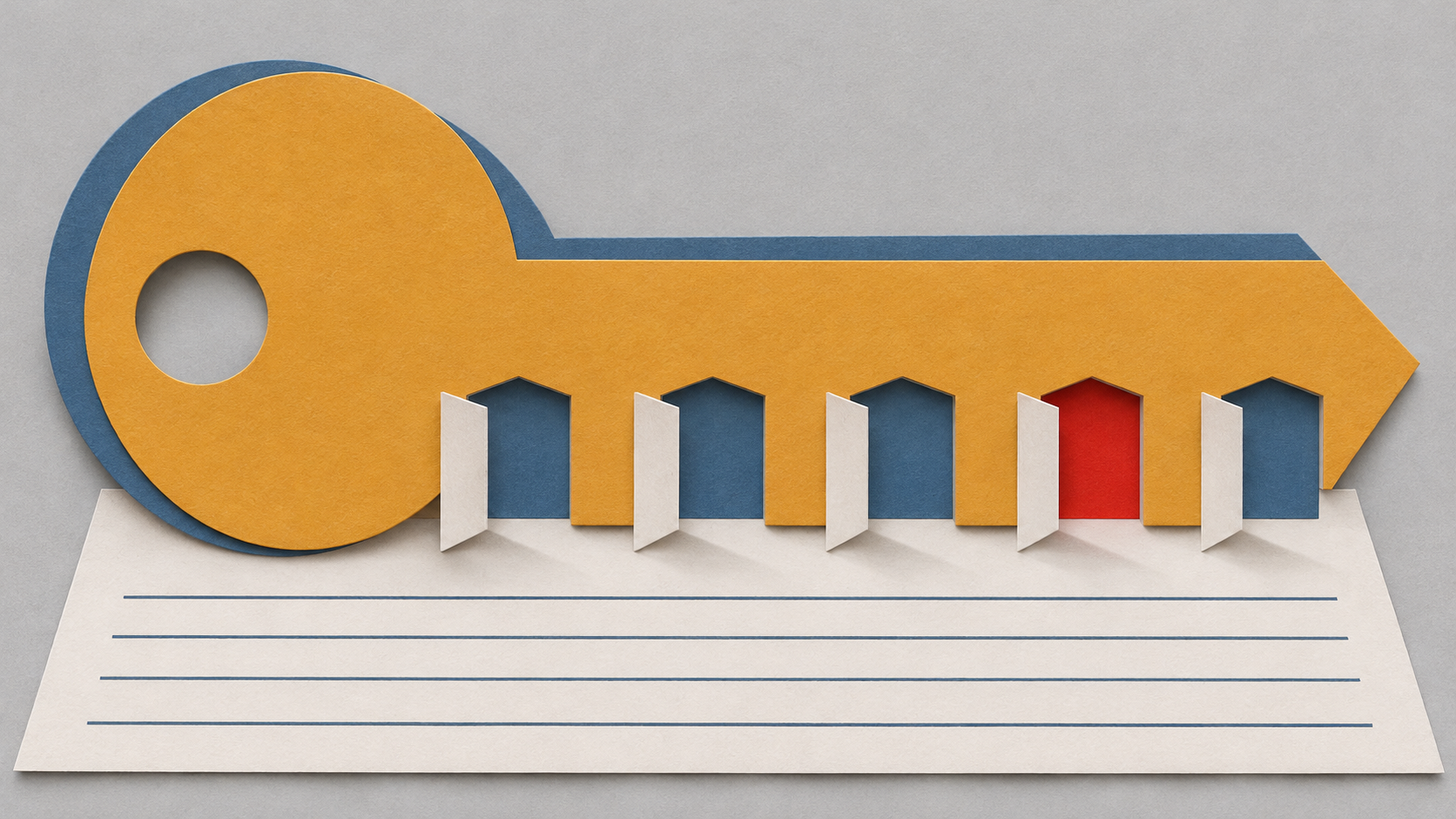
An AI agent is software you let act on your behalf: book the flight, pay the bill, move the money. It is a valet key for your financial life. Today the banks clarified something important about that key. Citibank rewrote its online user agreement this week so that customers who give a third-party AI agent account access are responsible for the resulting transactions, even if the agent gets hacked. PNC changed its terms today. Citizens Bank emailed warnings to customers. JPMorgan and Bank of America got there last month.
Why this matters more than it sounds: for fifty years, the deal on electronic banking has been that unauthorized transfers are largely the bank's headache, not yours. That protection hangs on the word "unauthorized." If you handed your credentials to an agent, the bank can argue you authorized everything that followed, including the theft. Same money, different legal box. That is not a technicality, it is the whole shield. The fine print is where this gets decided, which is a good reason to actually read it.
The timing is not accidental. Free agent assistants that place calls and make payments for you arrived on ordinary phones this month, days before these clauses appeared. Notice who is being careful: Anthropic's own new personal finance tool is read-only and, in the company's words, "can't move, manage, or invest your money." The firms closest to this technology are writing narrower permissions for themselves than the ones consumers are being nudged to grant.
Government investigators got all four big chatbots to plan an attack in under a day
Safety guardrails on a chatbot are often described as a lock. They are closer to a childproof cap: enough to stop a curious kid, not a determined adult with an afternoon. Congressional investigators at the Government Accountability Office tested the four biggest assistants and got every one of them to produce a workable attack plan within twelve hours of getting past the safeguards. Two returned plans for homemade explosives aimed at crowded American places. Two outlined attacks on electrical infrastructure, complete with targets and timing.
The companies pushed back in revealing ways: one acknowledged that determined users can get around its protections while questioning the method, another said older model versions were tested. Fair points, and beside the main one. The investigators' concern was not that this information exists online. It is that a tool anyone can open will now assemble the scattered pieces into a finished plan in hours instead of weeks. Assembly used to be the hard part. It is a reminder that the same question put to different assistants gets different answers.
Senator Maggie Hassan of New Hampshire commissioned the audit and takes over the Homeland Security Committee in January, where one of her first hearings will be on this. "The AI public safety threat is no longer theoretical," she said, warning that without action it is "a question of when – not if – a bad actor will use AI to plan and carry out a major attack." Expect subpoenas before you see a statute. Congress moves slowly on capability and quickly on blame.
A flaw in the plumbing of the Fortune 500 cost under $200 to find
Java is not something you see. It is pipe inside the walls of the building: banks, airlines, phone networks, hospitals. On Monday Oracle patched a serious defect in it, and federal cyber officials followed with an urgent notice telling organizations to inventory every Java install, including copies buried inside other software they bought, and to fix internet-facing systems first. The flaw lets an outsider run their own code on a machine without logging in. Java sits in roughly nine out of ten of the largest American companies.
The detail that should change how you think about this year: the researcher who found it used AI, and it took about an hour to locate the bug, two more to build a working exploit, and under $200 in computing costs. A weekend hobby budget. The same firm's chief executive expects unpatched machines to sit exposed "for another five to ten years," because somebody has to notice the pipe, find it and replace it, in thousands of buildings, by hand.
Finding flaws got cheap and fast. Fixing them did not. That gap is the new risk, and it does not sit with the researcher or the vendor. It sits with the hospital running an old scheduling system, and with the patient whose records are inside it.
The Anthropic IPO priced at $83 a share hours after the Fed warned about AI debt
Anthropic sold shares tonight above its own target range and starts trading Thursday on Nasdaq. The raise is the largest in history, bigger than SpaceX's. Read the numbers below slowly, because the striking thing is not the size. It is the shape: revenue climbing at a speed almost nothing in business history matches, alongside losses on a similar scale, and about $26 billion of the shares bought at the offering price by Google, Microsoft, Nvidia and AMD, companies that also sell to Anthropic.
| Measure | Figure |
|---|---|
| Price per share | $83, above the $70 to $78 range |
| Raised | About $81 billion, a record |
| Value, fully diluted | About $1.5 trillion |
| Revenue, nine months to September | About $33 billion |
| Operating loss, same period | About $25 billion |
Company figures reported by CNBC as the offering priced on November 18.
Earlier the same day, the Federal Reserve released its October notes. Almost every official now expects further rate increases, and AI-driven demand was named a material source of inflation risk. Staff flagged something else: AI-related borrowing is growing fast through "complex and opaque financing structures," including leases kept off the books and arrangements that loop between the same handful of firms.
In kitchen terms: you borrow against the remodel you haven't finished, and your neighbor lends you the money to buy his own stove. It works beautifully while the house keeps appreciating. If it stops, the losses are larger than anyone's books showed, and they are concentrated in a few places. That is how this risk reaches people who never bought a share: through a retirement account, and through what the Fed does to the mortgage rate to cool it off.
The fight ahead is about liability, not capability
One more piece from today fits the pattern. Satya Nadella explained on a New York conference stage why Microsoft offered buyouts to about 60,000 employees in October: to give people "agency in making choices" while the company reorganizes so that employees manage AI agents instead of doing the work themselves. A generous reading is that he is being honest ahead of time. A plainer one is that the uncertainty of the transition was handed to the workers to resolve, one personal decision at a time.
So here is my view, and it is a prediction rather than a report. The next year of AI arguments will not be about how smart the models get. It will be about who is holding the bag when they are wrong, settled one clause and one courtroom at a time. Watch three things: whether regulators accept that clicking "allow" on an agent counts as authorizing a theft, whether state attorneys general go after the companies selling alerts to schools rather than the schools that buy them, and whether an insurer starts selling coverage for agent mistakes.
My bet is that a bank breaks ranks within the year and advertises the opposite promise: use our approved agent, and if it loses your money, we cover it. The moment one does, the others follow, because customers understand guarantees far better than they understand disclaimers. Liability is not a side issue in this technology. It is the product decision nobody wants to make out loud.
And in Baltimore County, four families are asking a court the same question in the simplest possible form. Their lawyer said the point is to keep it from happening again. That is not a technology argument. It is a question about who answers for the machine.
Arthur Down is a journalist with more than 12 years of experience writing about technology, personal finance, health and everyday consumer topics. He studied Journalism and Media Studies at the University of Sheffield, started as a reporter at a regional newspaper and has worked freelance since 2014. At N33 he writes and edits the blog's practical guides to AI tools.
How we research, source and review articles