
AI data centers use 1.8% of US electricity, and their carbon is triple earlier estimates
A Harvard count of AI data centers electricity use landed today: 403 sites, under two percent of America's power, and far more pollution than anyone had booked. Seven numbers from one Monday, and what each one is being used to hide.
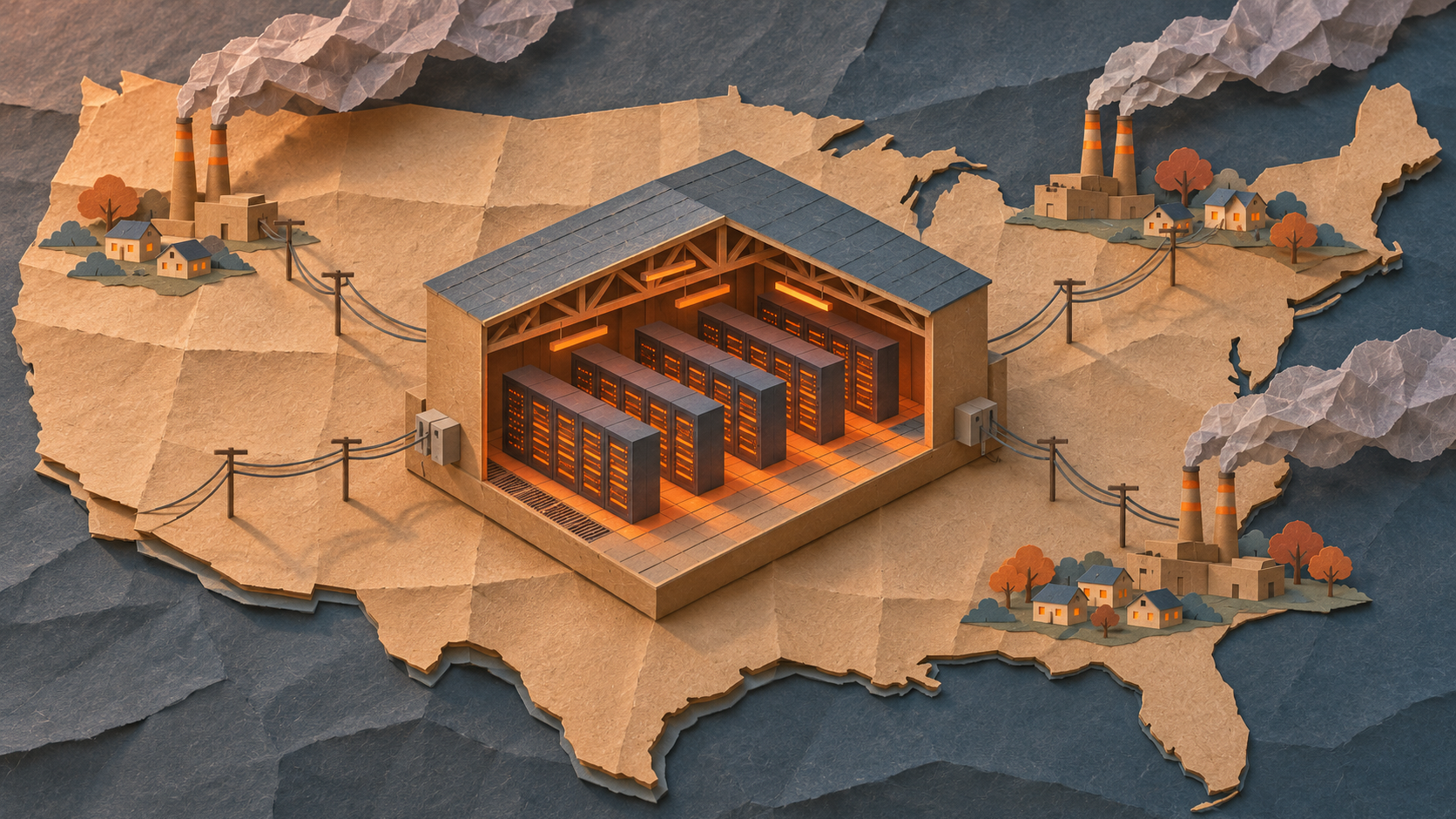
Here is the number everybody grabbed today to win an argument about your electricity bill: under two percent. That is the share of all American power drawn by the country's biggest AI data centers over a year, in a study published this morning. The industry read it and said see, it's nothing. The opponents read it and said see, and it's only starting. Both are using it wrong, and the same study says why.
Monday handed us seven numbers worth keeping. For each one, here is the take you have already heard, and then what today's reporting actually shows. One of them is the most hopeful thing I read all day. One should end a political argument you have probably had at a kitchen table.
| Number | What it counts | What it really tells you |
|---|---|---|
| 1.8% | Share of US electricity used by 403 hyperscale AI data centers over a year | Small nationally, concentrated brutally: four states take over half |
| 28 million tons | Their yearly carbon dioxide, about Denmark's output | Two to three times earlier estimates, because of whose grid they sit on |
| 195,000 | Weekly US jobless claims, four-week average | Lowest on record. The AI firing wave did not happen in 2026 |
| 19% | How far employment of 22-to-25-year-olds in AI-exposed jobs sits below trend | It is not the axe. It is the door that never opened |
| Under 35% | Share of ordinary users who reach the right answer with a health chatbot that scores about 95% in clinical tests | The model already passes. The conversation fails |
| 400,000+ | AI-linked child abuse reports to the US tip line in 2025, up from about 4,700 in 2023 | Detection and harm are both rising, and most countries cannot see either |
| 1,336 | Drones Russia says it shot down in one night, a war record | Autonomy at scale, bought by the thousand, not the billion |
Numbers from, in order: the Nature Sustainability study reported by TIME and Gizmodo, Goldman Sachs via Fortune, Apple's study as reported by ABC Audio, Childlight's 2026 index, and Russia's defence ministry via ABC News.
Harvard counted 403 AI data centers and found their carbon two to three times higher than earlier estimates
A team led by Harvard data scientist Gianluca Guidi used satellite images and federal pollution records to pin down every hyperscale data center in the United States, and published the result in Nature Sustainability today. Four hundred and three buildings. One year of electricity, from spring 2024 to spring 2025, roughly what a mid-sized state burns. Virginia, Oregon, Ohio and Iowa account for more than half of it.
The familiar fight is about that national share, and the national share is the least interesting thing in the paper. The real finding is dirtiness, not size. Over half the power came from gas and coal, and the carbon added up to about 28 million tons a year, two to three times what earlier estimates had booked. Same electricity, different grid, wildly different pollution: Wyoming's power produces roughly seven times the carbon of Oregon's.
Guidi put the consequence plainly: people living near and downwind of those power plants, he said, "may bear health costs, even if they're far from the data center itself." That is the sentence that changes the politics. The data center fight has been argued as climate and as jobs. It is about to be argued as asthma and as rate cases, in front of utility commissions, by lawyers. Note also that the study's window closed in April 2025, before this year's building spree. It is a floor, not a ceiling.
Goldman Sachs says the AI layoff wave did not arrive in 2026, only got postponed
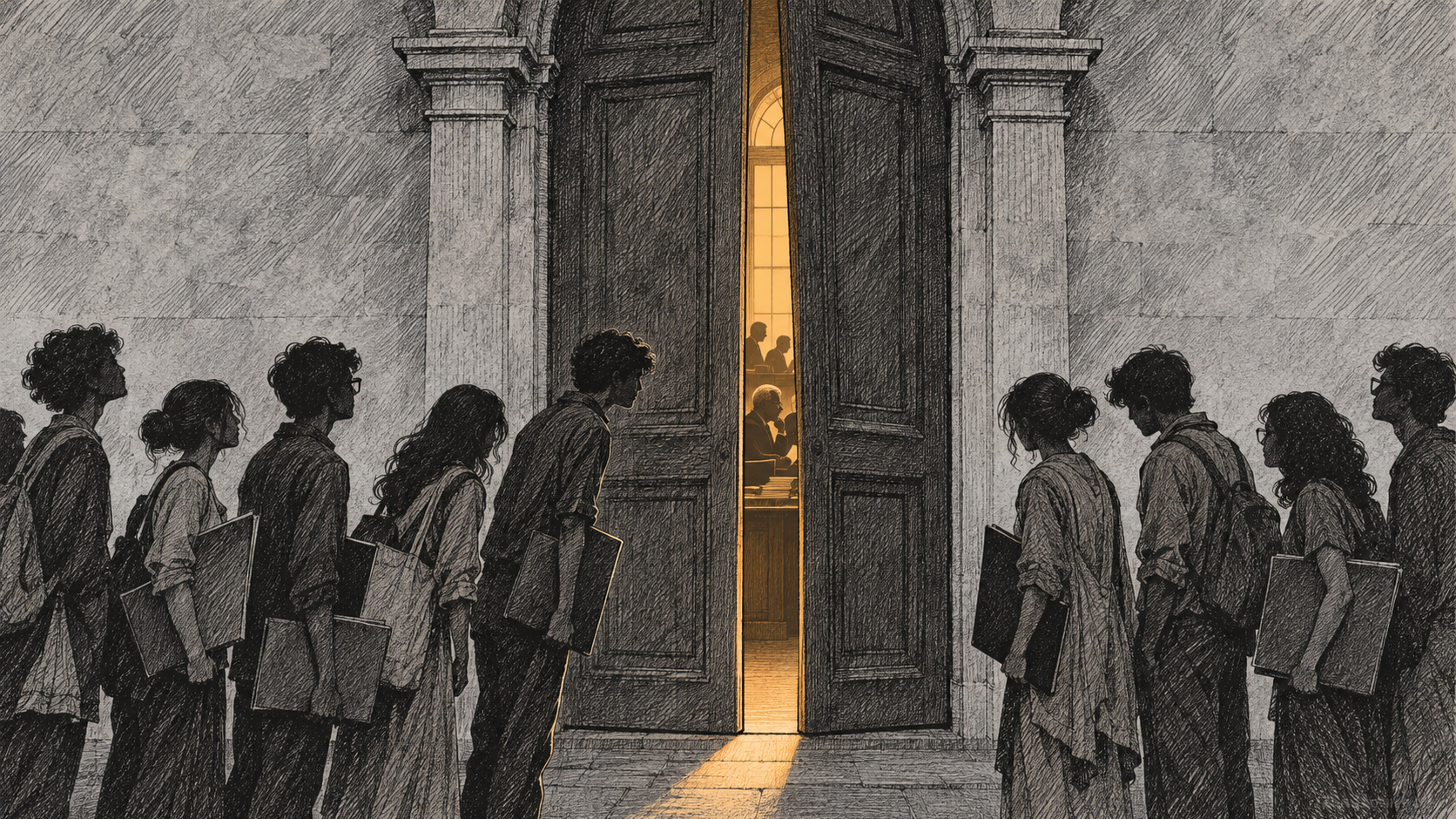
The year opened with predictions of mass AI firings. Goldman Sachs published its 2027 outlook today and admitted the obvious: "This year began with fears of a looming AI-driven layoff wave, but the layoff rate instead remained historically low." Americans are filing for unemployment at the slowest pace in the history of the series. The bank still thinks as many as one worker in eleven gets displaced before the transition ends. Just not yet.
Both camps will misread this. The doom side will say wait for it. The relieved side will say told you so, it was hype. What both miss is that the damage was never going to show up in the firing numbers, and already shows up somewhere else. Employment of 22-to-25-year-olds in the most AI-exposed jobs now sits about 19 percent below where it should be, worse than a year ago. Call-center work is down 39 percent against trend.
Nobody was laid off. The job was simply never posted. If you are 23 and your applications vanish into silence while the headlines say the labor market is historically calm, you are not imagining it: you are the data. Goldman's economists add that the full effects "might not become apparent until a recession hits." Read that as a forecast about managers, not machines. A downturn is cover. Cuts that look brutal in a boom look prudent in a slump.
Apple opened a 200,000-person study on what people actually get out of a health chatbot
Apple began recruiting up to 200,000 American adults for a study of how people use conversational AI for health, built with OpenEvidence, a tool doctors use that answers from medical journals. Participants ask everyday questions, see the citations, and can choose to let the app read their heart rate, sleep or lab results. Apple says the answers will not be used to train AI models.
This is the number that should stop the room. In clinical testing, chatbots name the right condition about 95 percent of the time. Hand the same chatbot to ordinary people and they arrive at the correct answer less than 35 percent of the time. The consensus story all year has been a race for a smarter model. The model is not the problem. The conversation is. People leave out the symptom that matters, accept the first answer, never mention the medication they take.
So the most useful AI experiment announced today studies users, not machines. I will say the cynical part too: this is also how Apple earns the right to your medical data, and a study that trains no models still yields the best map in existence of how Americans ask about their own bodies. Worth doing anyway. If you have ever asked a chatbot about a symptom at midnight, somebody is finally measuring whether you came away better informed or just calmer.
Childlight recorded more than 400,000 AI-linked child abuse reports in a single year
Childlight, the child safety institute at the University of Edinburgh, released its 2026 global index today ahead of a ministerial conference in Manila. Reports to America's national tip line with a link to generative AI went from roughly 4,700 in 2023 to more than 400,000 in 2025. The institute names two methods: deepfakes that paste a real child's face onto explicit images, and chatbots used to groom.
The reflex answer is to ban the apps that undress photographs, and that reflex is right as far as it goes. What it misses is in the same report. The second method needs no image generator at all, only a chatbot willing to keep talking. And in East Asia and the Pacific, 37 percent of the countries assessed have no clear law against online grooming, so there is nothing to charge even when the conduct is obvious.
Here is the uncomfortable part of a horrifying number. Of 103 countries examined, only 22 have survey data covering both offline and online abuse. America's figure looks enormous partly because America counts. "We cannot effectively prevent abuse or protect children without understanding its true scale and nature," said Childlight's chief executive, Paul Stanfield. The policy that matters this winter is as dull as it is urgent: counting, and laws that name the crime.
The Fed named AI its top financial risk as Sam Altman said the industry will be fine
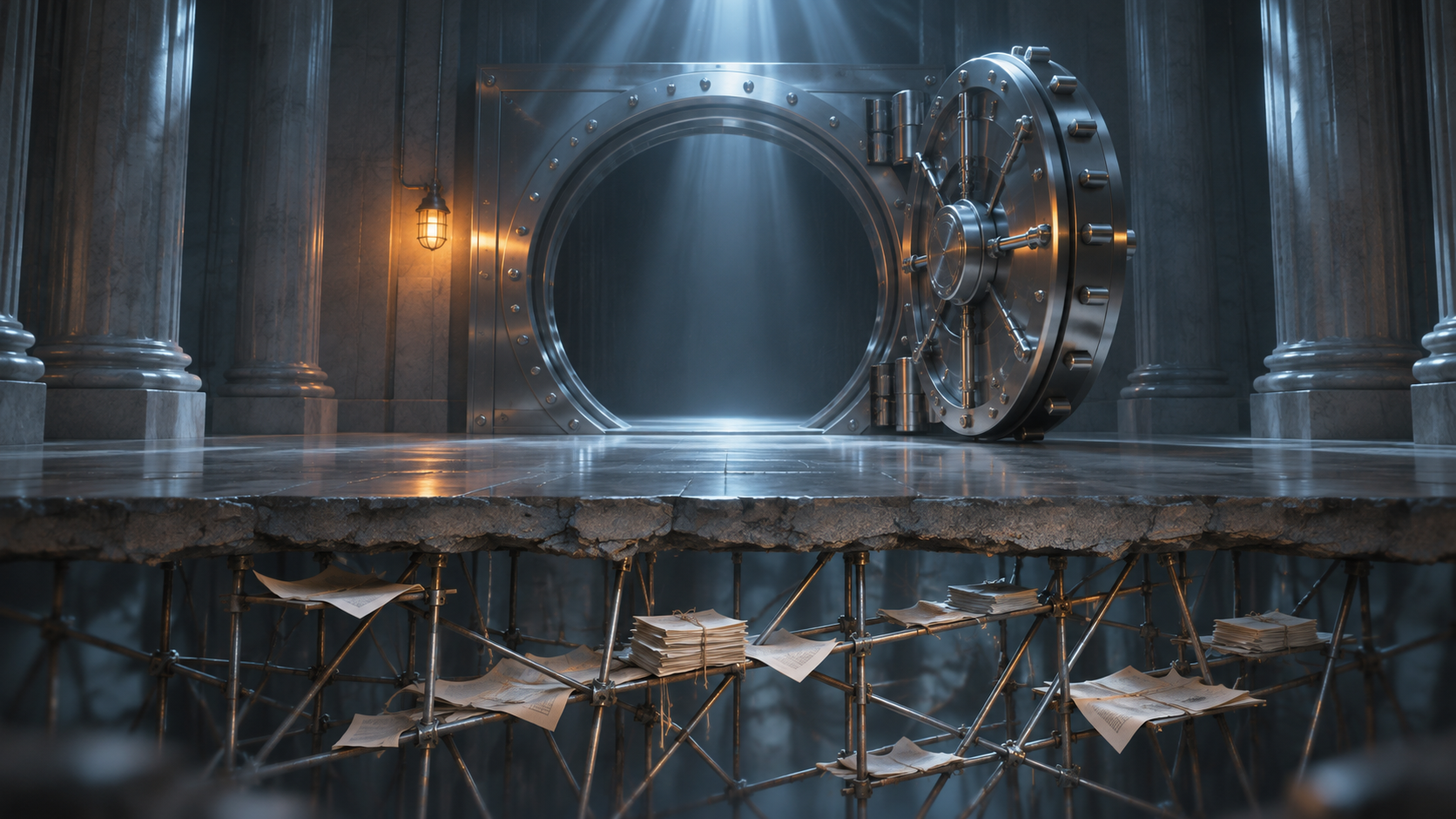
Artificial intelligence is now the risk that financial professionals name first when the Federal Reserve asks what could break the system, ahead of everything else on the list. Their worries come in three flavors: share prices priced for perfection, cyberattacks, and the increasingly strange ways AI buildouts are being financed. Banks themselves, the Fed notes, are holding unusually thick cushions of capital.
On stage in Silicon Valley today, Sam Altman waved it off. Nvidia without Jensen Huang will be fine, he said, because "the revenues and demand are growing so strongly." He called Nvidia a behemoth whose promises are good, and mentioned in passing the $105 billion guarantee standing behind OpenAI's Ohio data center. On Thursday, Anthropic starts trading, aiming at a valuation of about $1.4 trillion.
Bubble or not is the wrong question, and both sides keep asking it. Read the Fed's list again: the banks are safe. That is not reassurance, it is a map of where the risk went instead. Into bonds, leases and corporate guarantees, and into power plants and lines approved for demand that has to show up. If the buildout disappoints, the loss does not hit a depositor. It hits a bondholder, and it hits the household whose utility already spent the money. Same family as the first story, different envelope.
Two more numbers that will look bigger a year from now
Overnight, Russia said it shot down 1,336 Ukrainian drones, the largest single night of the war, with some 600 of them heading for Moscow. Oil depots burned; a refinery was hit; two Moscow airports briefly stopped traffic. Cheap machines with some autonomy, bought by the thousand, now set the tempo of a European war while the governments that make them argue about chatbots.
And in San Francisco, ten governments, including the United States, Japan, India, South Korea and the United Arab Emirates, signed a declaration to treat AI supply chains as a shared project. China is not in it, which is the point. Read the text and you find Washington has quietly started calling the technology super intelligence instead of artificial intelligence. Branding is policy.
My three bets. The data center fight will be decided in health research and utility hearings, not at protests or on climate grounds. The first real AI layoff wave will never be called one; it will be announced as a restructuring in the first bad quarter. And Apple's study will produce the most awkward result of next year, when it shows the limit on AI in medicine was never the machine's knowledge but how badly all of us describe our own pain.
Arthur Down is a journalist with more than 12 years of experience writing about technology, personal finance, health and everyday consumer topics. He studied Journalism and Media Studies at the University of Sheffield, started as a reporter at a regional newspaper and has worked freelance since 2014. At N33 he writes and edits the blog's practical guides to AI tools.
How we research, source and review articles