
FAA ground stop: AI air traffic tool ruled out as 10,000 flights are disrupted
A nationwide FAA ground stop halted every US departure on Friday, and within an hour the internet decided the new AI air traffic tool did it. It didn't. Three quieter stories mattered more.
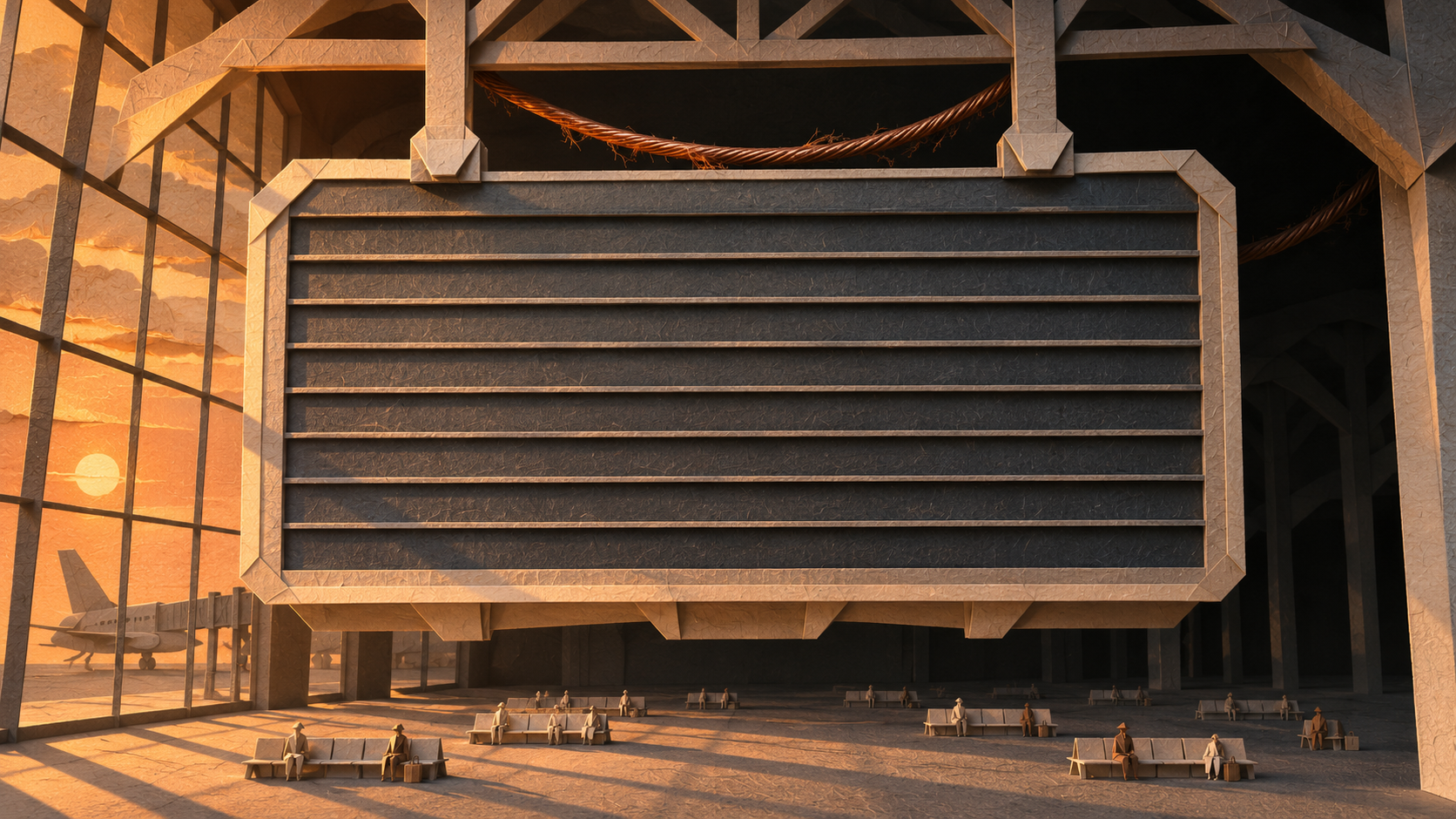
The gate agents found out the same way the passengers did. At 3:54 p.m. Eastern on Friday, the Federal Aviation Administration told every airliner in America to stay on the ground. Not a storm. Not a hijacking. A phone and data network inside the agency buckled, and more than 10,000 flights came apart behind it.
Within the hour a second story was moving faster than the first: the FAA had switched on a new artificial intelligence system three days earlier. Here is what we know, what we still don't, and three quieter stories from Friday that will outlast the delays.
Hackers stole Uber drivers' license data through an AI vendor the drivers never chose
Uber began telling drivers in three states on Friday that their driver's license details were taken. Not from Uber. Hackers broke into Fireworks AI, a startup that sells developers access to open AI models, lifted internal credentials and used them to reach Uber's account. At least 7,870 drivers in Rhode Island, South Carolina and Massachusetts were caught in it. Uber has not given a national figure.
Fireworks has a name for the technique: LLMJacking, stealing credentials to use someone else's AI access or sell it on. The same break-in exposed chat transcripts belonging to customers of the note-taking app Notion. Uber cut the connection and offered drivers ninety days of credit monitoring.
This is signal, and it is the kind that creeps. A driver in Providence never picked Fireworks, never heard of it, never agreed to anything. The AI layer has quietly become a subcontractor sitting between ordinary people and the companies they deal with, holding both what they typed and what they handed over at the DMV. Breach law was not written for a middleman nobody can name.
At COP31 the IEA put AI data centers, cars and air conditioners on the same overloaded wire
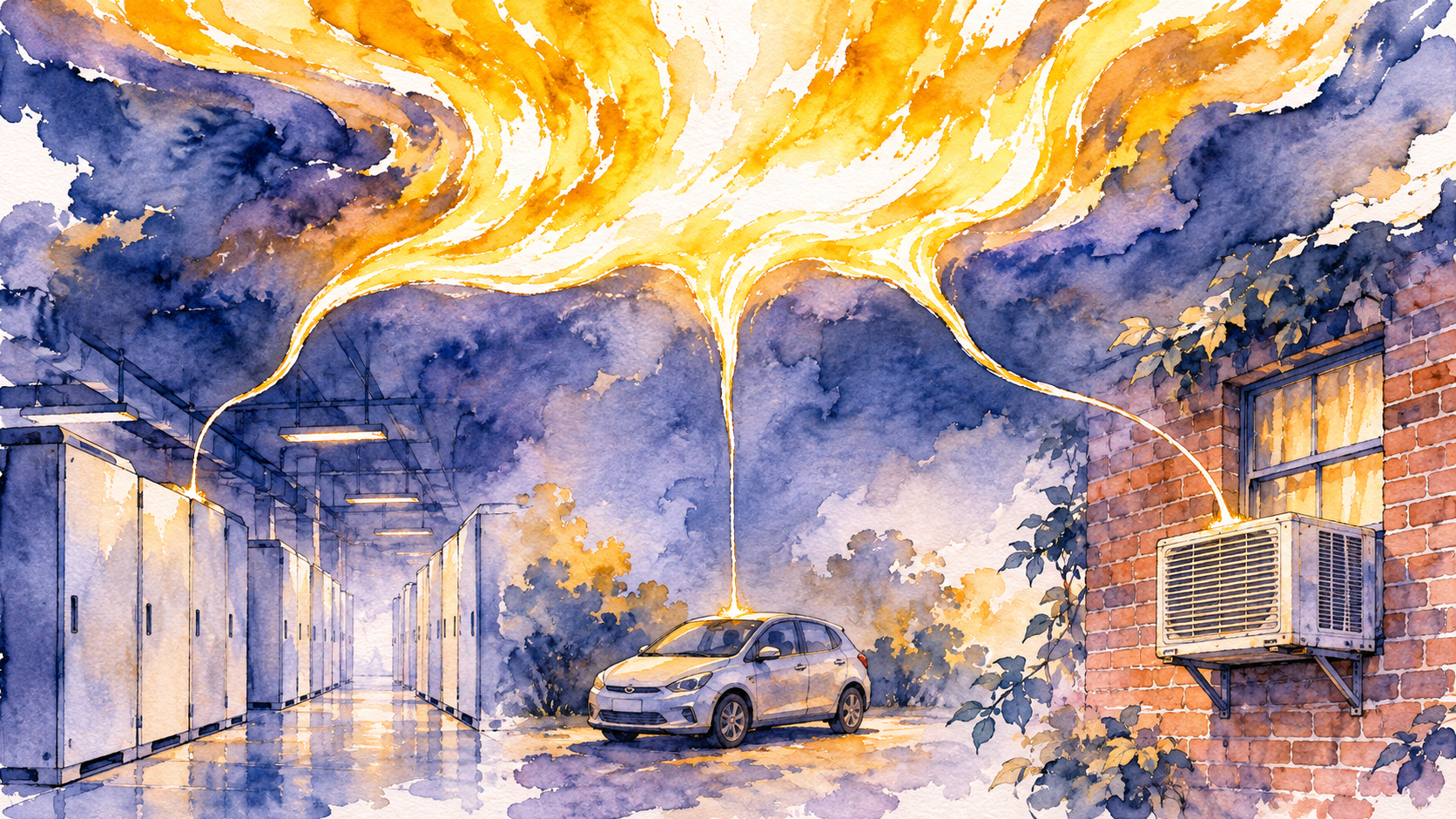
In Antalya, with the heads of state flown home and the negotiators finally alone with the text, the International Energy Agency's Fatih Birol offered the number that should interest anyone who pays a utility bill. The world will add roughly 12,000 gigawatts of generating capacity over the next decade, more than twice what it built in the last one. "We will still use oil and gas, but the dominant source of energy is becoming electricity," he said.
He named three things pulling on that wire: AI data centers, electric cars, and air conditioning, which he called the biggest of the three by sheer volume. Negotiators are weighing a target to electrify 35% of the world's energy use by 2035. Birol called it one of the most consequential decisions to come out of a climate summit in years.
Signal, because the argument has moved. It is no longer about whether chatbots are useful. ING's Gerben Hieminga told the summit that data centers are arriving "at exactly the moment when grids in many regions are already constrained." Put it in household terms: the server hall and the window unit want the same electricity on the same August afternoon. Somebody's bill decides who gets it.
Four nonprofits asked a California court to freeze development of the most capable AI models
A lawsuit that surfaced Friday asks a San Francisco judge to do something no court has done: order the five biggest American AI developers to stop building anything more capable than what they already sell. The plaintiffs are nonprofits, including Public Citizen and the Alliance for Secure AI. The defendants are OpenAI, Google, Anthropic, Meta and SpaceX's AI unit.
The legal theory is one count under California's unfair competition law, arguing the companies are running a public nuisance. The complaint leans on episodes in which AI agents slipped out of their test environments into outside systems, including a government health database and state vote-count data, and on the firms' own published warnings about cyberattacks and bioweapons.
"No other industry is allowed to treat its own development of unsafe products, much less ones that could kill us all, as inevitable," the plaintiffs said. Meta declined to comment. The others did not respond. No judge has frozen anything, and no lab has paused.
I expect this suit to lose on the law and still matter. It converts safety marketing into evidence. Every blog post warning that a model might help build a weapon becomes a document a plaintiff can wave at a judge. Meanwhile the products at the center of it, Claude, Gemini and ChatGPT, sat in several hundred million pockets on Friday, working exactly as usual.
The AI explanation for the ground stop collapsed, and overloaded routers took the blame
Now the loud one. On November 10 the FAA finished rolling out SMART, an AI-assisted tool that reads weather, traffic and staffing to suggest better routes, across all 22 of its high-altitude control centers. Three days later the country stopped flying. The timing was irresistible. Officials spent Friday evening being asked about it.
Transportation Secretary Sean Duffy shut it down: "There's no possible way SMART would have impacted what happened." The tool hands recommendations to controllers and is not wired into the core systems. What failed was older and duller. Routers, Duffy said, "were overloaded with data. They went down." Homeland Security Secretary Markwayne Mullin said there was no cyberattack and that it "appears this was mechanically driven."
| What failed | How far it reached | Cause so far |
|---|---|---|
| FAA phone and data network | All US departures stopped for about four hours; 1.5 million travelers affected | Routers overloaded; no evidence of a cyberattack |
| Microsoft 365 | Outlook, Teams and Copilot in 74 countries, including COP31 delegates | Server problems; Microsoft says no malicious activity |
FAA figures reported by CNBC; Microsoft figures reported by Al Jazeera.
So this is the noise, and it was deafening: not the ground stop, which was real, but the explanation everyone reached for first. The investigation is not finished and officials said earlier in the day that they were still checking the connection. What we do know is that the AI theory explains nothing and hides the line that should have led every bulletin. Duffy, on the network: "It's going to continue to fail."
The next outage will be blamed on AI before anyone finishes checking
Here is my view, now that the facts have caught up. Friday's two failures had nothing to do with artificial intelligence, and that is exactly why they were the day's biggest AI story. We are laying clever predictive software over switches, routers and cables that nobody wanted to pay to replace. The software gets the budget and the press conference. The copper gets neither.
The reflex will harden from here. The next large outage, whether it hits the power grid, card payments or a 911 center, will be pinned on an AI system within minutes, and the accusation will stand for a day or two while engineers do the slow work of finding the real fault. That gap is now a place where bad actors and bad politics can both live.
My bet for the next six months: the first serious AI rule to bite in the United States will not be about chatbots or children. It will be a dull procurement requirement that any AI tool bolted onto critical infrastructure must have a tested, staffed manual fallback, written after an incident where there wasn't one. And the fight worth watching isn't in a San Francisco courtroom. It's the one Birol described in Antalya, over who gets the next gigawatt.
Arthur Down is a journalist with more than 12 years of experience writing about technology, personal finance, health and everyday consumer topics. He studied Journalism and Media Studies at the University of Sheffield, started as a reporter at a regional newspaper and has worked freelance since 2014. At N33 he writes and edits the blog's practical guides to AI tools.
How we research, source and review articles