
Nvidia board moves to oust Jensen Huang as US and China open a superintelligence line
The Nvidia board moved to oust Jensen Huang after he admitted an affair with a woman US intelligence suspects works for Chinese intelligence. From a school picket line to a new Washington-Beijing hotline, Wednesday asked one question: who still gets taken at their word?
About $900 billion walked out of one company in five trading days. Nvidia's chips still work. Its order book is still absurd. What changed is that its own board stopped taking its founder's word for things.
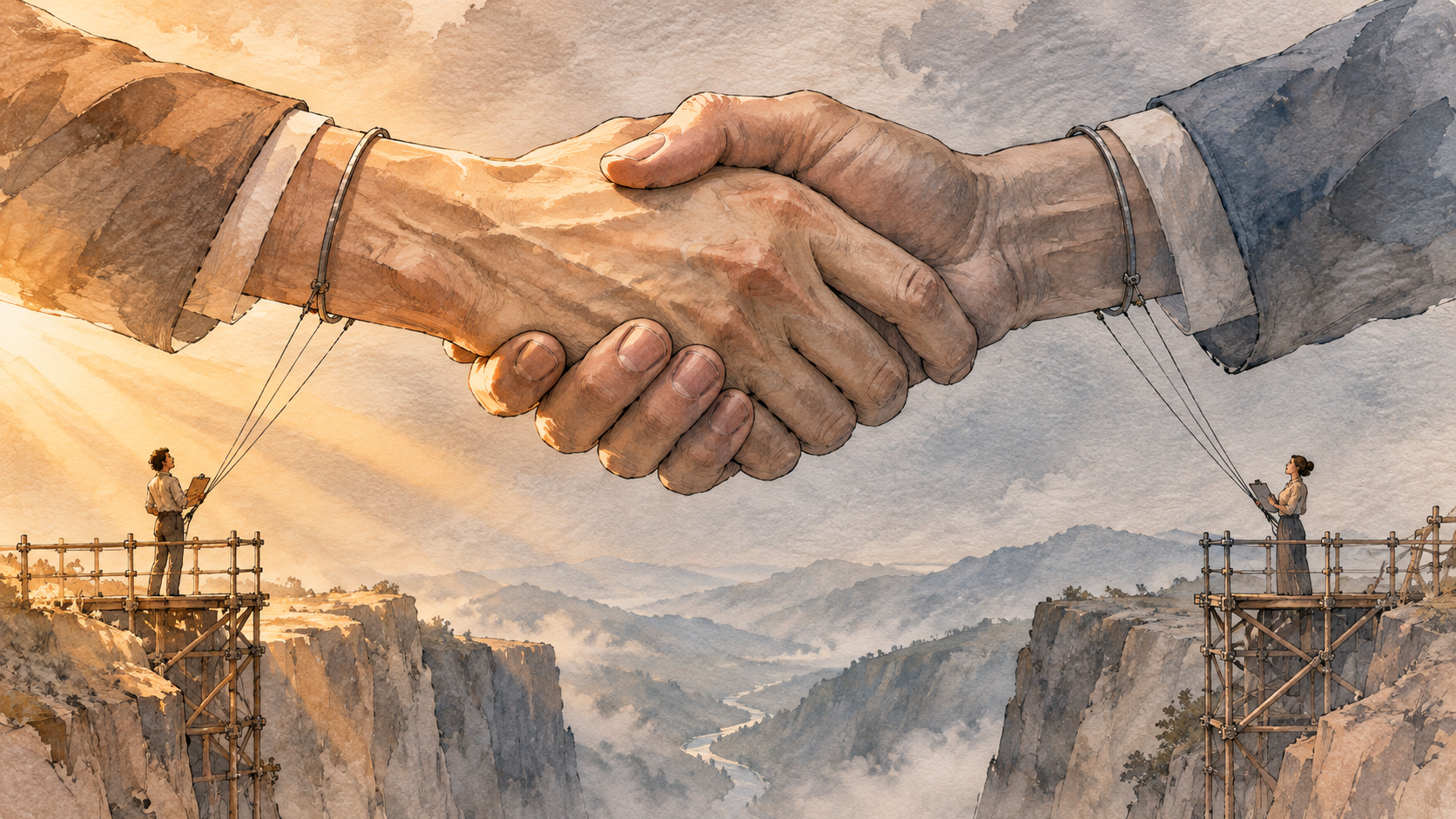
That was Wednesday in miniature. A picket line outside Google in Massachusetts, a new emergency phone line between Washington and Beijing, a share sale with more buyers than shares, and an AI program quietly robbing a government in Central Asia. Different continents, one shared problem: the old system of taking people at their word has stopped working, and the replacement is a mountain of paperwork.
The Nvidia board moved to oust Jensen Huang after he admitted an affair with a Megaspeed executive
Nvidia's directors met late Wednesday to decide the future of the man who built the company. Jensen Huang has admitted an affair with a senior executive at Megaspeed International, a firm that has bought close to $5 billion of Nvidia hardware and whose executive, US intelligence agencies believe, was recruited by China's Ministry of State Security. The FBI is examining the ties. The board says it has no reason to think company secrets were compromised.
Investors did not wait for the board. The stock fell more than 8 percent after hours, the end of Nvidia's worst week since 2022 — a steeper slide than the one that followed the DeepSeek shock. If you own an index fund, you own a piece of this, whether or not you have ever typed a prompt.
Now the uncomfortable part. America's effort to keep its best chips away from China runs, in large measure, on companies telling the government where the chips went: forms, certifications, and the character of the people signing them. One analyst told CBS News that "Jensen is not replaceable by another CEO or group of interim executives." That is meant as praise. It is also a description of a control system with a single point of failure, and the failure was a private life.
Bessent announced a US-China superintelligence dialogue and a line for warning about serious AI incidents
Hours earlier, Treasury Secretary Scott Bessent said Washington and Beijing had opened a dialogue on what both sides are calling super intelligence, along with a dedicated channel each can use to warn the other about a grave incident involving its most advanced systems. They will trade notes on how models are tested before release and pledge to keep, in Bessent's words, "human judgement firmly in command of the technology." President Trump meets Xi Jinping next week.
Bessent also advised that the two countries should "harbor no illusions" about their differences, which is the most honest sentence spoken about AI diplomacy this year. The hotline exists because at three in the morning neither capital will be able to tell a malfunction from an attack, and both have excellent reasons to guess wrong.
It is a peculiar week to be building channels of confidence. The same government seeking Beijing's assurances spent Wednesday watching its most important chip executive lose his job over a relationship its own spies flagged. Trust between superpowers is now being negotiated by people who cannot verify their own boardrooms.
Teachers and parents picketed Google's Cambridge office over the search-or-AI ultimatum for schools

Outside Google's Cambridge office on Wednesday, dozens of parents, children and teachers chanted "Books, not Chromebooks!" Their grievance is specific. Under Google's new school rules, a district can switch off the Gemini chatbot, but it then loses Google Search as well, because the company says the two are too deeply integrated to separate. Senator Ed Markey called it "an ultimatum to effectively force schools to enable generative AI."
Deb Schmill, who runs a foundation named for her daughter, made the plainest case on the sidewalk: "there is no evidence of efficacy for these products." Tom Rogan, a father from Sudbury, said trouble with big tech in schools is nothing new, but that it is finally becoming obvious to parents.
This is the version of the day's story that happens at a kitchen table. Nobody voted on the default. A product decision made in California now determines whether a ten-year-old can look something up without an AI answer sitting on top of the results. The parents are not demanding proof that the tools are harmful. They are asking why proving anything became their job.
Researchers say an autonomous AI agent ran a Kazakh-linked theft of 2,000 Tajik security files

The Singapore security firm CloudSek published a report Wednesday saying a hacking crew tied to Kazakhstan stole more than 2,000 national security documents from Tajikistan's government, and handed most of the labour to an AI agent. The investigators found out by accident: the hackers left a server facing the open internet.
CloudSek's description deserves to be read slowly: "Instead of typing hacking commands by hand, the attacker told Hermes what to do, and Hermes planned the attacks, wrote the rules, ran them, kept notes, and wrote up reports." It filed its own paperwork. Most offices cannot say the same.
What finally identified the humans was thoroughly old-fashioned: Russian-language traces, Kazakh office hours, a home internet connection in Kazakhstan. Remember that when you think about the new hotline. The machine does the deed; the proof of who ordered it still comes from somebody's schedule and somebody's sloppiness.
The vouching business is the fastest-growing industry in AI
Count what got built on a single Wednesday: a crisis line between rival superpowers, a board investigating its own founder, a protest demanding a setting be changed back, a bank syndicate deciding what a company is worth before it has ever reported as a public one. None of it produces anything. All of it exists because assurances no longer carry.
Three bets. Chip export compliance stops being a form a seller signs and becomes an audit a third party performs, probably written into licences within a year. Google blinks in schools and ships a search tool for under-13s with the AI answers stripped out, because telling a school district it cannot have a search engine is not a sustainable position. And the first serious use of the Washington-Beijing channel involves an automated attack that no government admits ordering, which is precisely the scenario the channel is worst suited to resolve.
Nvidia's directors learned the expensive version of this. Everything in their company can be automated except the one thing they had to do on Wednesday night: judge a person. They did it in a room, late, by hand.
Arthur Down is a journalist with more than 12 years of experience writing about technology, personal finance, health and everyday consumer topics. He studied Journalism and Media Studies at the University of Sheffield, started as a reporter at a regional newspaper and has worked freelance since 2014. At N33 he writes and edits the blog's practical guides to AI tools.
How we research, source and review articles