
Today's AI winners and losers were decided by parents, Beijing and a memory chip
Today's AI winners and losers had almost nothing to do with who has the best model: a child's school laptop, a stranded pile of chips in Hong Kong, and the little component that just made your next laptop pricier.
Pour the coffee. The biggest artificial intelligence story today wasn't a new model or a market swing. It was a 13-year-old in North Carolina whose parents found out, from their school district's own monitoring software, that she had spent months telling a chatbot she wanted to die. The chatbot came bundled with her school-issued laptop. Nobody asked them first.
Today sorted the AI business into winners and losers in a way that had little to do with who builds the smartest machine. One of the quieter losers is you, standing in a store in December, looking at a price tag. Here's the scoreboard.
Parents became the AI industry's most expensive problem
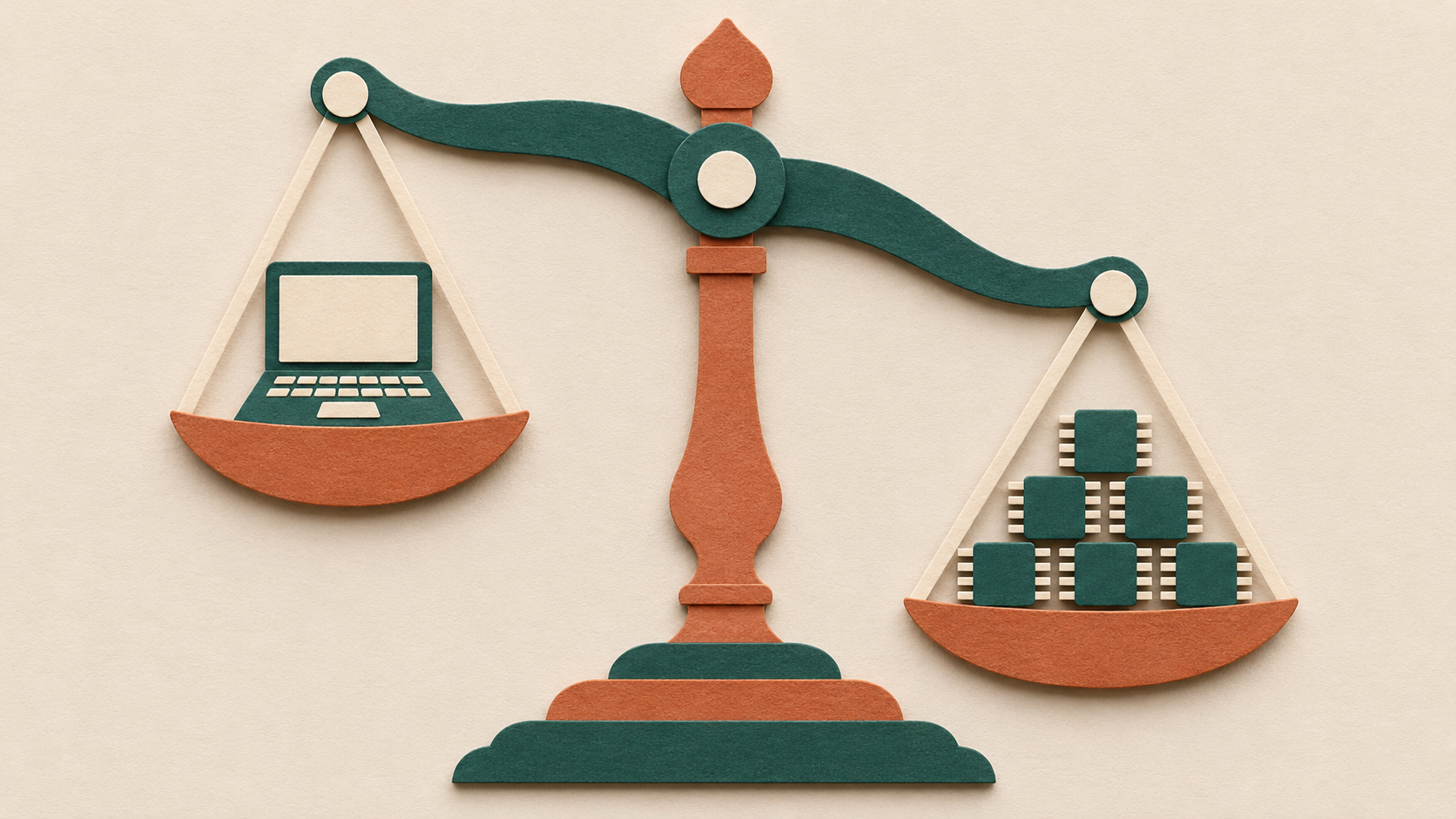
The girl is called Emma Doe in the complaint, filed Wednesday in a California state court by her parents and the EdTech Law Center. They say she reached Google's Gemini through a school-issued Chromebook starting in the autumn of 2025, and that by this March she was sending thousands of messages a month about suicidal thoughts. The lawsuit argues Google rushed the assistant into classrooms because rivals were shipping.
Google says it is "reviewing the claims in the lawsuit and we take this very seriously." It has plenty of company on the docket. CNBC reported today that Snap quietly settled this week with two teenagers who claimed severe psychological distress, sparing chief executive Evan Spiegel a turn on the witness stand in Los Angeles, and that Meta agreed in August to pay nearly $17 billion to settle a child mental-health case brought by state attorneys general.
What today established, I think, is that the cost of putting an untested chatbot in front of a child has finally got a number attached, and the number is enormous. Parents aren't waiting for the courts. TechCrunch counted eight companies now selling phones for kids that deliberately can't do much, running from about $100 to $240 up front plus a monthly fee. The hot product in consumer tech is a phone that says no.
Nvidia got its permission slip for China and found nobody home
Here's the day's best piece of irony. Roughly 600,000 of Nvidia's H200 chips are sitting in Hong Kong waiting for Beijing to let them across the border, Reuters reported today. Chinese regulators have waved through small batches, with a few big internet companies getting around 10,000 apiece, but they have not approved the big volumes everyone assumed would follow once Washington loosened its grip.
Scarcity does what scarcity does. By late October, a single server packed with eight of those chips was changing hands in China for more than $900,000, about three times its price a year earlier.
For two years the argument in Washington has been that advanced chips are America's leverage, and the only question was how tightly to squeeze. Beijing has quietly answered that the leverage runs both ways. It would rather accept slower homegrown silicon than deepen its dependence on American hardware. The loser today isn't really Nvidia's quarter. It's a theory of power that assumed the other side was desperate.
The surprising loser is whoever buys the next laptop in your house
Memory chips: boring, invisible, in everything you own. Engadget laid out the damage today. AI data centers now absorb something like 70% of the world's supply of the ordinary memory that goes into laptops and phones, three companies make nearly all of it, and JP Morgan expects prices to finish 2026 roughly 400% above where they sat in 2024. Nvidia's top consumer graphics card, launched at about $2,000, now sells for thousands more.
You can already see it on the shelf. Global tablet shipments fell about a quarter in the summer quarter, the weakest in nearly three years, with the iPad falling fastest. Manufacturers can't get the parts to make new models meaningfully better, so shoppers shrug and keep the old one. Omdia's Himani Mukka put the recovery somewhere past 2028.
So the surprising winner is the handful of memory makers quietly having the decade of their lives, and the surprising loser is a family replacing a cracked Chromebook. SK Hynix's chairman reckons it will take at least four to five years to build enough capacity. Translate that into English: the cheap laptop, the kid's first tablet, the console under the tree. All pricier, and staying that way through a couple more Christmases. That's the AI boom's bill, and it doesn't arrive as a headline. It arrives as a shrug at a checkout.
Washington's AI fight just moved from the campaign trail to the drafting table
Reuters reported today that Democrats are preparing a wave of AI legislation for January, when they take control of Congress. Chuck Schumer wants to shield households from the electricity costs that come with data centers. Representative Lori Trahan is pushing independent safety testing of powerful models and rules on when an AI company can be sued for harm its product causes. Representative Greg Casar wants AI executives testifying under oath.
Watch the liability piece. Power bills make the speeches, but liability is the one with teeth, because it decides whether a case like Emma Doe's stays a lonely lawsuit in California or becomes the template. Reuters noted tech shares slid this week partly on the prospect of all this. Investors understood the assignment: the cheapest input in AI so far has been the freedom to ship first and apologise later.
The AI boom started mailing its bill to households, and households noticed
| The thread | Who won today | Who lost today |
|---|---|---|
| Chatbots in classrooms | Families with lawyers, and the makers of deliberately dumb phones | Google and anyone whose safety plan is a press statement |
| Chips and China | Beijing's patience | The idea that export controls are America's trump card |
| The memory squeeze | The three companies that make the world's memory | Everyone buying a laptop, tablet or console this winter |
| AI in Congress | Lawmakers who ran on utility bills | The freedom to ship first and apologise later |
Compiled from today's reporting; the calls are ours.
Notice what connects these. None of them is about capability. The models didn't get smarter today. What changed is that the costs the industry has been quietly pushing onto other people's balance sheets, a child's mental health, a household's electricity, the price of a student laptop, all came back with a name on them.
My bet for the spring: the phrase that gets expensive isn't a technical one. It's "we moved fast because our competitors were moving fast." In a boardroom that's strategy. In a courtroom, and soon in a statute, it starts to look like evidence. Finish your coffee.
Arthur Down is a journalist with more than 12 years of experience writing about technology, personal finance, health and everyday consumer topics. He studied Journalism and Media Studies at the University of Sheffield, started as a reporter at a regional newspaper and has worked freelance since 2014. At N33 he writes and edits the blog's practical guides to AI tools.
How we research, source and review articles